
Three Feet Away
The Sudan OIG report documents what happened to the paperwork after the system broke. The unanswered question is what happened to the system.

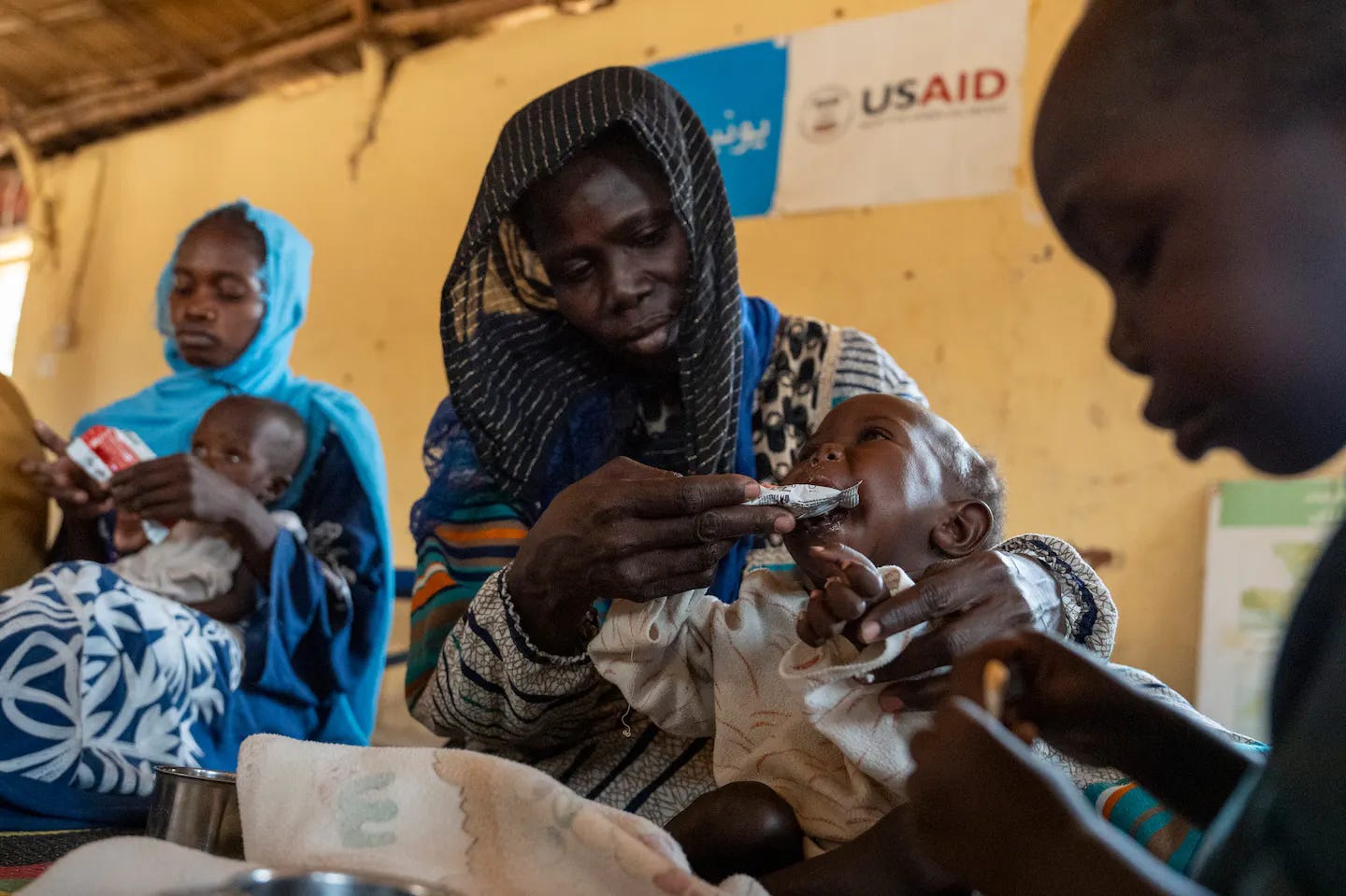
by a former USAID Foreign Service Officer
The State Department officer sat three feet from me.
We had worked together for over two years by then. Our families had met. We had been to each other’s homes. We had done what you do at overseas postings, built the kind of friendship that happens when you are far from home and the work is serious and the happy hours are long and you stop being colleagues and start being something closer.
In the first days after the inauguration I had to tell him we got a directive not to speak to him.
Not slow it down. Not document it. Not run it through clearance. Not speak. To the man three feet away whose family had been at my table.
He looked at me.
He said: seems like incompetence just took over.
That was it. No anger. No outrage. Just a man who had spent his career in government recognizing, with the flat clarity of someone who has seen institutions fail before, exactly what was happening and naming it in six words.
Every morning after that brought a different rule. Do not contact implementing partners. Do not contact your chief of party. Do not answer questions. Severe consequences for violations. Nobody seemed to know who was in charge anymore. The guidance that arrived contradicted the guidance from the day before and would be contradicted again by morning.
That restriction on State was temporary. It was lifted. But it happened first, when the confusion was sharpest and the questions were arriving fastest, in the window when paralysis does its worst work.

An earthquake hit Myanmar while this was unfolding.
The Sagaing region. Implementing partners working directly with affected communities were writing to ask whether they could use existing funds to respond. Basic questions, the kind that get answered in twenty minutes on a normal day. Could they move resources? Could they continue operations? What should they tell the people arriving at their doors with nothing?
We could see the emails.
We could not answer them.
I watched them stack. Not metaphorically. On a screen, in an office, in a country where I had been posted to do exactly the work those emails were asking about. Partners asking whether they could help people in rubble. Us sitting there. Unable to say yes. Unable to say no. Unable to say anything.
Around day three, colleagues I had worked with for years began disappearing from directories. Not fired. Not reassigned. Just gone. Their accounts went dark. The emails they would have answered went unanswered. The files they maintained became inaccessible because the servers holding them required credentials that no longer existed. The institutional knowledge they carried — which partner had a history of delays, which anomaly in the data was a red flag, which problem had been escalating for six months — sealed itself inside systems nobody remaining could open.
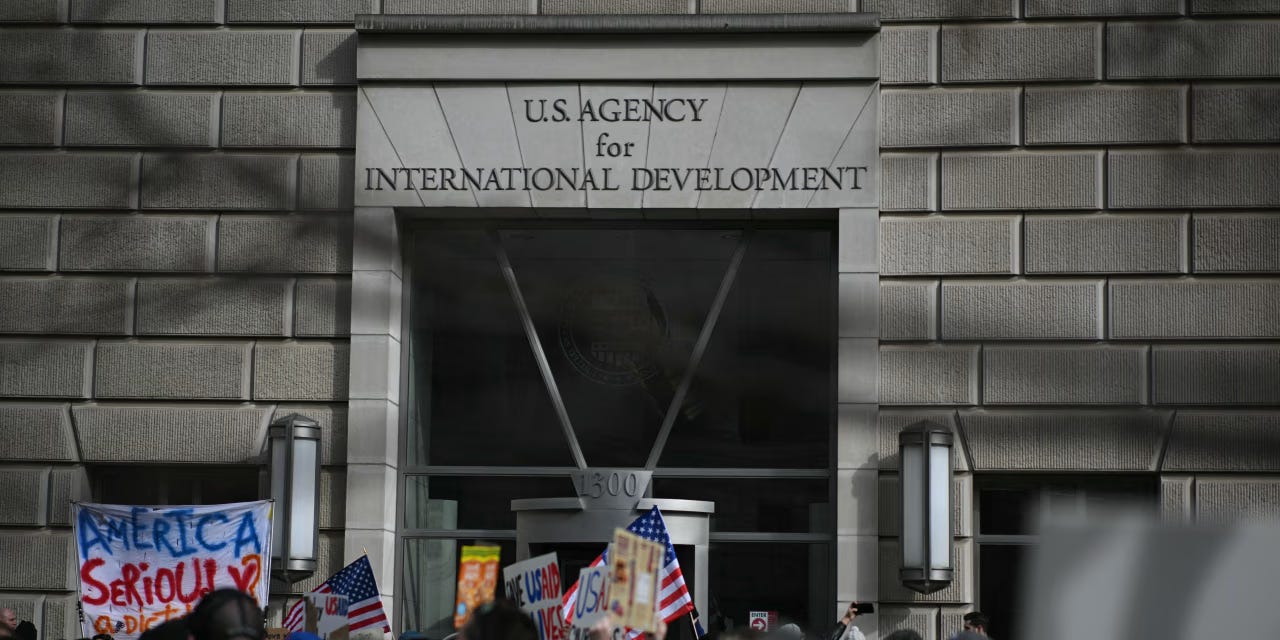
The Office of Inspector General, in Report E-650-26-001-M dated June 1, 2026, calls this “limited operating status.”
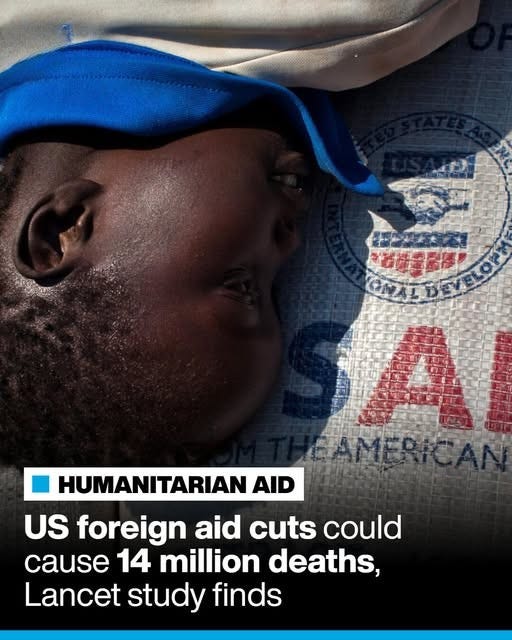
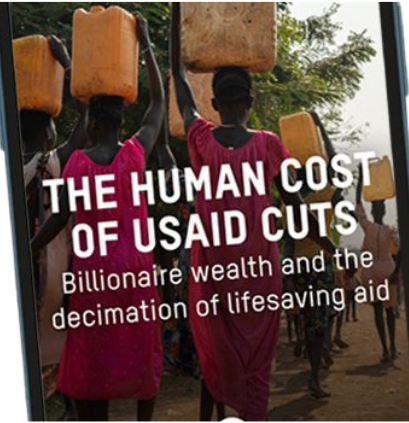
While that report was being written, 260,000 civilians including 130,000 children were trapped at Zamzam displacement camp in Sudan, where people were dying at a rate of up to 2.4 per 10,000 per day. The Sudan Doctors Union estimated 522,000 children had died from malnutrition by January 2025. The United Nations called Sudan “a humanitarian crisis of staggering proportions.” The United States had been its largest donor the year before — $880.3 million, nearly 43 percent of all international assistance, over half of it emergency food — managed through 31 active humanitarian awards worth $853 million that were now being transferred, on a sixty-day timeline, to a department that had never held them.
The Office of Inspector General named their evaluation of how that money was managed:
Sudan: USAID Did Not Continuously Monitor Humanitarian Assistance or Share Unresolved Fraud and Other Allegations and Key Documents with the Department of State.
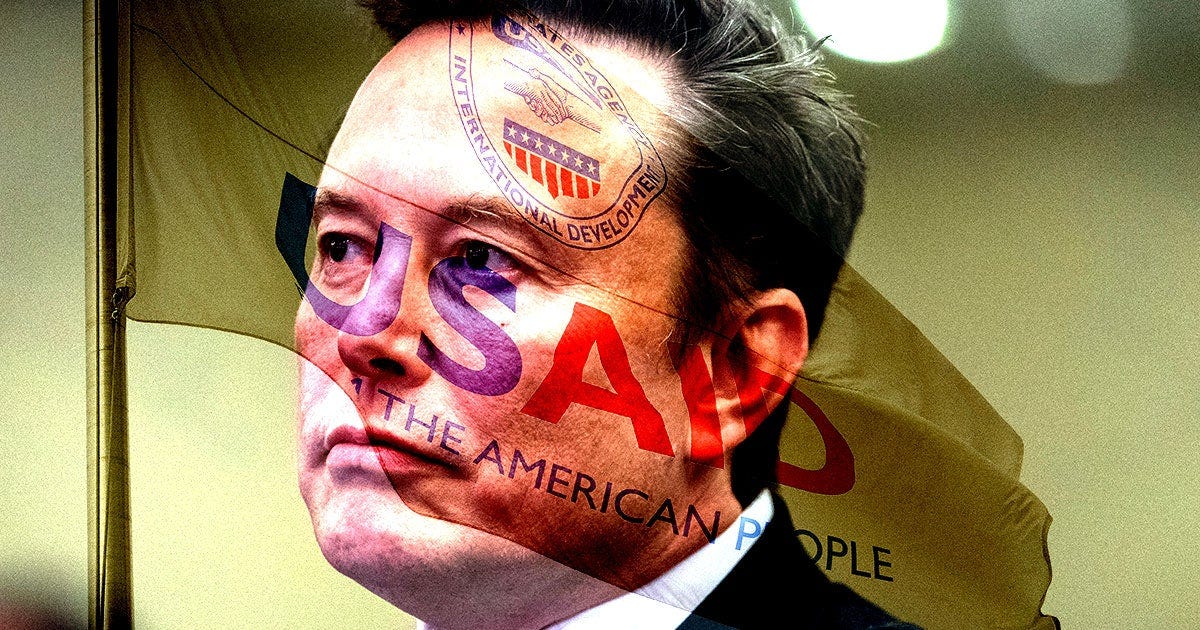
Donald Trump signed the Executive Order on January 20th freezing foreign assistance. Consistent with that order, USAID issued a stop-work order to its only ground-level monitor in an active civil war. The TPM halted all work. The report records what followed in a single clause: the monitor was stopped
“even though 35 humanitarian awards remained active.”
Over a billion dollars in active aid — $1.04 billion — lost its ground-level eyes for four months.
Marco Rubio signed the January 24th order extending the pause to all U.S. foreign assistance. The report records what followed:
“confusion over funding and award status stalled aid in Sudan”
Rubio was named Acting USAID Administrator in February as mass administrative leave emptied the agency of the people responsible for managing its awards. Pete Marocco, Rubio’s appointee, signed the directives canceling 5,200 USAID programs and reducing the workforce to a few hundred people, then sent a farewell email obtained and reported by ABC News, CBS News, and the Associated Press:
USAID was now “under control.”
Marocco left government in April 2025. Rubio replaced him with Jeremy Lewin, a DOGE operative now performing the duties of Under Secretary of State for Foreign Assistance, Humanitarian Affairs and Religious Freedom — the senior U.S. official for disaster and humanitarian response.
Trump, Rubio, Marocco, and Lewin are in the footnotes. The career officers who built the system, maintained it, and were removed from it are the findings.
Page 10 of the report contains this sentence:
“Award files were incomplete, in part, because the AORs who were responsible for maintaining them were placed on administrative leave from late January through June 2025.”
The cause is in the same paragraph as the failure it produced. The recommendations treat the incomplete files as an agency compliance problem.
An Agreement Officer’s Representative is not a job category. They are the single person who holds the living memory of an award. Why decisions were made two years ago. Which anomaly is a red flag and which is the noise of war. The difference between a $62,438 loss because Sudan’s military intelligence seized medical commodities and a $62,438 loss because someone made a mistake. Three of the five sampled awards — $202 million, nearly a quarter of the active Sudan portfolio — had no financial, monitoring, or performance documents in the system at all.
Five of the ten missed site visits were directly caused by that stop-work order. The monitor was legally barred from operating. When the order lifted in mid-March, physical visits could not resume until mid-May — not because USAID was slow, but because deploying field staff, securing travel clearances, and coordinating safety requirements in an active civil war takes time that had been consumed by a decision made in Washington. During those months the UN Office for the Coordination of Humanitarian Affairs reported high humanitarian needs across Sudan in nutrition, health, and education.
The report’s conclusion:
USAID “did not have reasonable assurance that the awards were implemented as intended.”
Someone in Sudan built a tracker anyway.
Forty-seven open entries. Twenty-three awards. Two years of documentation, updated in real time through a formal four-step process, maintained through the freeze and the stop-work order and the personnel reductions and the forced transfer. Twenty-nine entries were loss, damage, safety, and quality incidents. Aid workers threatened. Beneficiaries killed. Supplies looted — three looting allegations alone carrying an estimated combined loss of $244,000. Thirteen fraud and abuse entries including Sudan’s military intelligence seizing $62,438 in medical commodities and armed fighters taking between $45,000 and $50,000 in fuel.
The report focuses on the failure to transfer the tracker to State. BHA officials said they did not share it because they were unsure how State would use it, and because there was uncertainty about which awards were active or terminated and whether State or USAID was responsible for them.
The country monitoring plan the report criticizes as missing was stored in email accounts belonging to the people who were removed. When they left, the accounts closed. The plan went with them. The report recommends that USAID provide it to State.
CSIS documented that USAID’s program design, monitoring, and evaluation expertise
“might not transfer effectively to the Department of State, especially without the retention of experienced personnel.”
The bureau that inherited BHA’s disaster response functions was less than 10 percent of BHA’s former size. The report asked whether USAID transferred its files correctly. It did not ask what happened to the files after that.
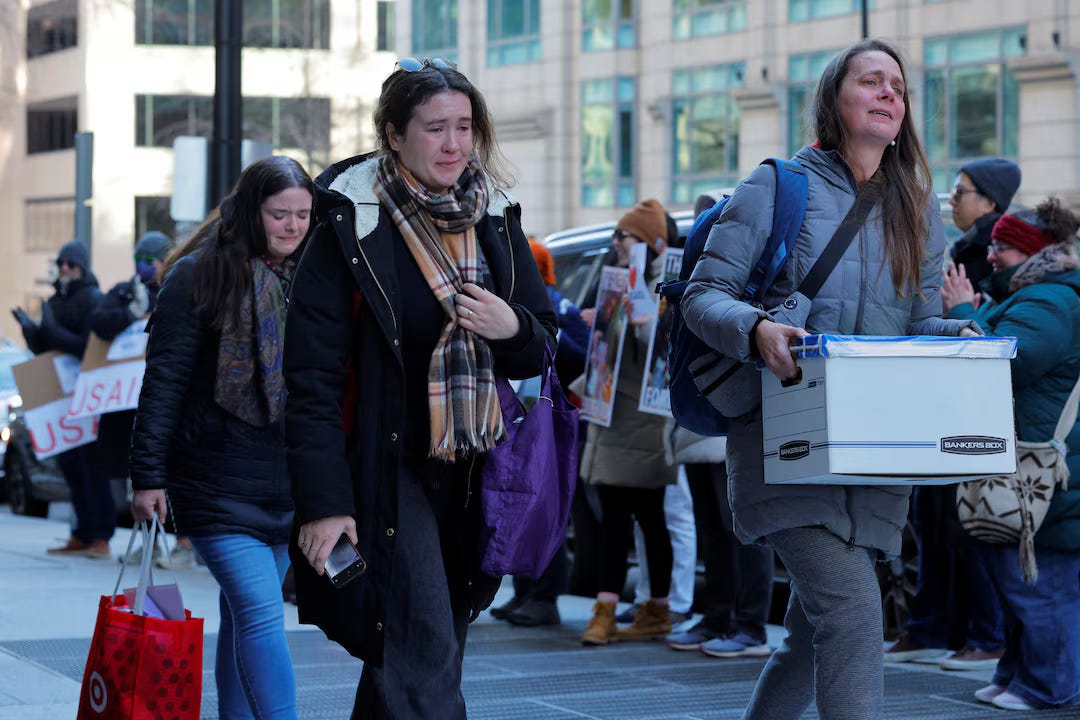
I have colleagues whose names I won’t use who were in Sudan.
Who built those trackers. Who took the calls from partners asking whether the money was coming. Who documented every looting incident, every seizure, every death.
All of them were reduced in force.
The agency shut its doors.
Some are trying to figure out what a career spent feeding starving people means now.
Open Appendix C. Page 15.
Award 1 through Award 23.
Every row marked Open.
Behind every row is a person who was paying attention.
Someone who caught something.
Someone who wrote it down.
Someone who kept working.
I sat three feet from a State Department officer I was not allowed to talk to.
In Myanmar, people were pulling bodies from rubble and our partners were asking whether they could help.
In Sudan, someone was still updating the tracker.
At Zamzam camp, 260,000 people were trapped.
The emails kept arriving.
We could not answer them.